
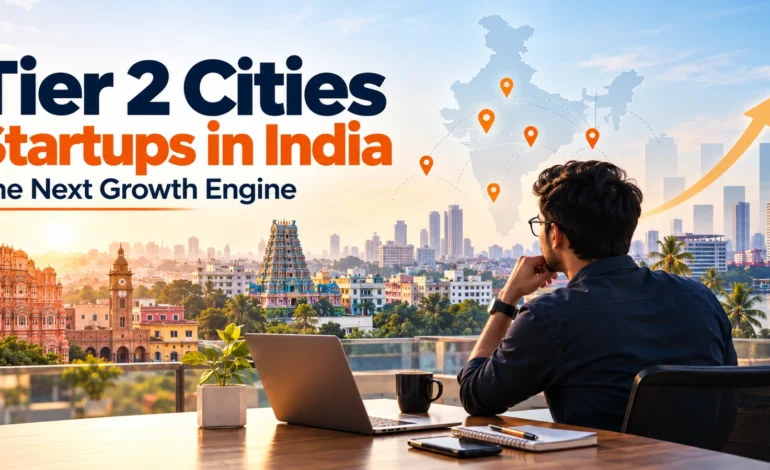
Tier 2 Cities Startups in India: The Next Growth Engine

For years, India’s startup story had a few familiar addresses: Bengaluru, Mumbai and Delhi-NCR. That picture is no longer complete. Founders in Jaipur are building for national consumers, engineering teams in Coimbatore are selling overseas, and local problems in cities such as Kochi and Bhubaneswar are becoming business opportunities.
The large hubs still matter because they hold strong investor, talent and corporate networks. What has changed is the need to live there from day one. A Press Information Bureau update from June 2026 reported more than 2.3 lakh DPIIT-recognised startups in India, with nearly half coming from Tier 2 and Tier 3 cities. The growth of Tier 2 cities startups in India is now part of the country’s mainstream startup economy.
Why Founders Are Looking Beyond the Metros
Lower costs are an obvious advantage. Rent, salaries and daily expenses are usually easier to manage, giving a young company more time to test its product. Money saved on a large office can go into hiring, customer research or sales.
Some professionals are also returning from metros with useful experience and industry contacts. Regional colleges provide younger talent, although senior specialists can still be hard to hire.
Cloud tools, digital payments and video meetings also allow companies to recruit remotely, speak to investors and serve customers across India. Location still matters, but it no longer controls every part of the business.
Local Knowledge Is a Real Advantage
A founder living outside a metro may see needs that larger companies miss: a retailer struggling with digital records, a farmer looking for better market access or a patient travelling too far for basic care. Being close to these users helps a team understand pricing, language and buying behaviour. The product may begin locally, but the same problem can exist across hundreds of similar markets.
This explains why Tier 2 cities startups in India are active in agritech, healthtech, fintech, logistics and regional commerce. In these sectors, local knowledge can be as useful as lower operating costs.
Emerging Tier 2 Startup Hubs
No city is ideal for every company. The right choice depends on the sector, customers and people a startup needs.
| City | Areas worth watching | Practical advantage |
|---|---|---|
| Jaipur | Fintech, ecommerce, mobility and SaaS | Access to Rajasthan’s market and proximity to Delhi-NCR |
| Indore | Agritech, food, commerce and software | Central location, colleges and manageable operating costs |
| Coimbatore | Manufacturing technology, SaaS and healthtech | Engineering talent and a strong industrial network |
| Kochi | Logistics, SaaS, agritech and digital services | Port connectivity and Kerala’s startup ecosystem |
| Chandigarh-Mohali | IT services, mobility, D2C and edtech | Tricity talent and relatively strong infrastructure |
| Bhubaneswar | Agritech, deep tech and GovTech | Academic institutions and state-backed support |
| Lucknow | Healthtech, consumer services and ecommerce | A large regional market and improving incubation facilities |
| Surat | Manufacturing technology, D2C and fintech | Close links with textile, diamond and trading businesses |
Working near an established industry can help a startup find its first customers, suppliers and experienced advisers. That advantage often matters more than a city’s popular label.
Sectors With Strong Potential
Agritech fits regions close to farming and food supply chains, with opportunities in crop information, inputs, storage and market access. Healthtech companies are working on diagnostics, telemedicine and affordable care.
SaaS teams can build locally and sell globally with reliable internet and skilled employees. Consumer brands can turn regional food, fashion or craft traditions into a distinct online identity. Industrial clusters also support automation, electronics and other engineering-led ideas.
Founders should still avoid following a sector only because it is popular. Local customers, skills and supply chains must support the business.
Funding Is Better, but Still Uneven
Angel networks, accelerators and venture funds now consider applications from across India. Investors interested in agriculture, financial inclusion and Bharat-focused products are also looking beyond the metros. Yet important introductions and investor events remain concentrated in major hubs.
Regional founders may therefore need to make themselves more visible. Reliable revenue numbers, customer retention and a believable market plan matter more than a polished pitch. Clear records, useful investor updates and occasional travel can help Tier 2 cities startups in India close that access gap.
Government and Ecosystem Support
National initiatives have brought entrepreneurship into more regional communities. MeitY-backed GENESIS initiatives support innovation beyond major hubs. Bharat Ascend, announced in 2026, aims to find and mentor ideas from Tier 2 and Tier 3 India.
State ecosystems such as Rajasthan’s iStart and Kerala Startup Mission offer local support. Founders should still read the conditions carefully. DPIIT recognition does not guarantee a grant, and programme rules can change.
Challenges That Should Not Be Ignored
Senior product leaders and specialised engineers may be difficult to find locally. Some cities have weaker transport links, while enterprise clients may prefer vendors with a metro presence. Growth-stage investors can also expect in-person meetings.
Relocation is not the only answer. A startup can hire remotely, open a small sales office near customers or work with a local university. The solution should match the actual gap.
Before Choosing a City, Ask These Questions
- Can we hire the people required for the next two years?
- Are customers, suppliers or industry partners available nearby?
- Are internet, transport and power dependable?
- Which local incubators or programmes are relevant to us?
- How often will we travel for sales and fundraising?
- Will the savings remain meaningful after those extra costs?
A manufacturing startup may value an industrial cluster, while a SaaS business may care more about engineering talent and connectivity. The right city is the one that supports the company’s daily work.
What Comes Next
Startup registrations show activity, but they do not prove long-term success. The real test is whether regional companies can retain experienced people, raise follow-on capital and win customers outside their home markets.
Conditions are improving, but no location can compensate for a weak product. The next phase of Tier 2 cities startups in India will be led by teams that combine local understanding with disciplined execution.
Information Disclaimer
This article uses publicly available government updates, research papers, news reports and industry websites. Startup Bulletin checks the information with reasonable care, but figures, funding details and programme conditions can change after publication. We cannot guarantee that every detail will remain complete or current.
Please verify important information with the relevant company, investor or government department before making a business, investment or legal decision. This article provides general information and is not professional advice.
If you find something incorrect or outdated, email contact@startupbulletin.in. Mention the page and the detail that needs attention so we can review it and make a correction where required.
Frequently Asked Questions
Founders can often operate at a lower cost while remaining close to regional talent and customers. Digital tools also make remote hiring, sales and investor communication easier.
There is no universal winner. Compare the available talent, customers, suppliers, infrastructure and travel needs with the requirements of your business.
Early teams may struggle to hire specialists, while growing companies often find senior leadership and investor access harder to secure.
Yes. Investors will still expect a capable team, verified traction, clear financial records and a credible plan for scaling.