
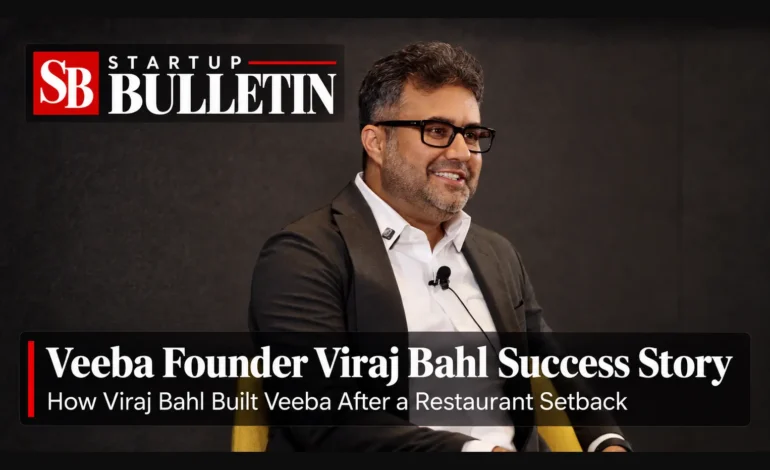
Veeba Founder Viraj Bahl Success Story

Viraj Bahl is the founder and managing director of Veeba, a food company known for sauces, mayonnaise, spreads and dressings. Veeba was founded in 2013 and grew from a business-to-business opportunity into a consumer-facing brand. The story is often told as a dramatic leap from a failed restaurant to a large food company, but the more useful version is about learning, product-market fit and distribution. Bahl discovered that supplying consistent sauces to restaurants could be a more scalable opportunity than running a single restaurant. Veeba later expanded its products and channels, including retail and online sales. Some media reports have discussed revenue figures, but those numbers should be treated as reported rather than audited unless supported by company filings. This article focuses on the founder decisions that can be verified and explains where readers should use caution.
| Key point | Research-based detail |
|---|---|
| Founder and MD | Viraj Bahl |
| Company | Veeba / VRB Consumer Products |
| Founded | 2013 |
| Initial opportunity | Sauces and condiments for food-service businesses |
| Current product focus | Sauces, mayonnaise, spreads and dressings |
| Brand detail | Veeba is named after Vibha, Bahl’s mother, according to company communication |
| Revenue caution | Some media reports cite large revenue figures; this article does not present them as audited |
| Later direction | Expansion from B2B supply into consumer food and beverage categories |
The setback that changed the direction
Viraj Bahl’s entrepreneurial journey is associated with a restaurant venture that did not work as planned. Public interviews describe the experience as financially and emotionally difficult. Instead of treating the failure as the end of his food career, Bahl studied what restaurants actually needed. A recurring requirement was reliable sauces and condiments that could be supplied with consistent taste, quality and packaging.
That observation created a different path. A restaurant serves customers one location at a time, while a B2B food supplier can serve many restaurants through one production and distribution system. The idea was not glamorous at first, but it addressed a clear business pain: professional kitchens need dependable ingredients that save preparation time and keep the menu consistent.
How Veeba started in 2013
Veeba was founded in 2013 by Viraj Bahl. The company began with a focus on food-service customers and products such as sauces, dressings and mayonnaise. B2B customers gave the business a practical testing ground because chefs and restaurant operators could provide direct feedback on taste, pack size, shelf life and cost.
The early period was not an overnight success. Coverage of Bahl’s journey describes a long period in which the company had to learn how to sell, produce and distribute at scale. The founder’s patience mattered because food businesses require working capital, quality systems and repeat orders. A product can be liked by a chef and still fail if it cannot be delivered consistently.
Why the B2B insight mattered
Restaurants face pressure on labour, preparation time and consistency. A ready-made sauce can help a kitchen standardise taste and speed up service. Veeba’s initial B2B focus allowed it to solve that operational problem rather than compete only for household shelf space. It also gave the company a route to recurring orders and institutional relationships.
B2B does not mean easy. Buyers may demand customised recipes, documentation, stable pricing and reliable deliveries. The company must meet food-safety standards and manage production at larger volumes. Bahl’s founder story shows the value of listening to a business customer before trying to build a mass consumer brand.
Moving into retail and consumer products
As Veeba developed, it expanded beyond professional kitchens into retail and online channels. Consumer products require a different kind of communication. A restaurant buyer may understand a bulk pack and a chef’s use case, while a household shopper needs a simple promise, clear label and attractive pack.
The brand’s range grew around sauces, mayonnaise, spreads and dressings. This allowed Veeba to participate in many eating occasions, from sandwiches and salads to home cooking. Expansion must still be controlled: every new product needs a formulation, supply chain, shelf-life, pricing and a reason for customers to buy again.
Brand identity and the name Veeba
Company communication says the name Veeba is connected with Vibha, Viraj Bahl’s mother. Personal meaning can make a brand memorable, but a name alone does not create loyalty. The customer experience is built through taste, quality, availability and trust in the label.
Veeba’s identity also reflects a broader ambition: make food preparation easier without asking consumers to compromise on flavour. That promise has to be supported by transparent ingredients, regulatory compliance and consistent manufacturing. Food founders carry a responsibility because their products become part of people’s daily diets.
What reported revenue numbers mean
Some media reports have discussed Veeba’s annual revenue at very large levels. Unless the figure is supported by audited financial statements or a clearly identified company filing, it should be described as reported and not as an independently verified fact. Revenue also does not equal profit; food companies face raw-material costs, manufacturing, logistics, trade margins, marketing and working-capital pressure.
This distinction is important for anyone reading a “Veeba founder success story.” The verified core is that Viraj Bahl founded Veeba in 2013 and built it from a B2B sauces opportunity into a broader food brand. The exact current financial scale should be checked against the latest company disclosures.
Distribution as a competitive advantage
Food products win when they are easy to find. Veeba’s growth required relationships with restaurants, distributors, retail stores, online marketplaces and possibly modern trade. Every channel has different margins, payment cycles and promotional demands. A brand can have strong consumer awareness and still struggle if it is out of stock or too expensive in a particular market.
The founder’s operational lesson is to treat distribution as part of the product. Formulation, packaging and marketing create demand, but supply chain execution converts demand into repeat sales. This is especially true for condiments, where a consumer may substitute another product if the preferred bottle is unavailable.
Viraj Bahl’s public role
Bahl became more visible through media interviews and his appearance as a judge on Shark Tank India. Public visibility can help a founder build brand trust and attract talent, but it also creates a duty to distinguish personal storytelling from audited business data. A television appearance is not a certification of a company’s finances.
His journey is useful because it shows that entrepreneurship can combine personal passion with disciplined commercial learning. The important part is not that the founder likes food; it is that he found a repeatable customer problem and built systems around it.
Lessons from the Veeba founder story
First, a failed venture can reveal a better business model if the founder studies the underlying problem. Second, B2B can be a strong entry point for a consumer brand because professional customers provide demanding, practical feedback. Third, food quality and supply reliability are long-term assets, not details to be added later.
The final lesson is evidence discipline. Founders and readers should separate company claims, media estimates and audited facts. Clear language builds trust, especially when a story includes revenue or valuation headlines.
The road ahead
Veeba’s future will depend on innovation, distribution, food safety, pricing and the ability to remain relevant as consumers try new flavours and formats. The company has also discussed broader food and beverage ambitions, but future launches should be treated as plans until they are confirmed by the company.
For the keyword “Veeba founder,” the accurate answer is Viraj Bahl. The deeper success story is a shift from a restaurant setback to a scalable B2B and consumer food business built through product learning and distribution.
Frequently asked questions
Veeba was founded by Viraj Bahl, who is also identified by the company as its managing director.
Veeba was founded in 2013.
The company initially focused on sauces and condiments for food-service and restaurant customers.
No. Media figures should be treated as reported unless supported by audited filings or clearly identified official disclosures.
Its public product range includes sauces, mayonnaise, spreads and dressings, with the portfolio subject to change.
Information disclaimer
This article is prepared from publicly available company pages, official records, historical references and reputable media reports reviewed for this draft. Figures such as funding, revenue, valuation, city count, users, jobs, product claims and targets can change and may not be audited. A company statement or media report is identified as reported and is not presented as independent verification. Readers should cross-check important information before making an investment, business, legal, political or purchasing decision. This is general information, not professional advice. If you find a factual error or have a credible correction, please email contact@startupbulletin.in.