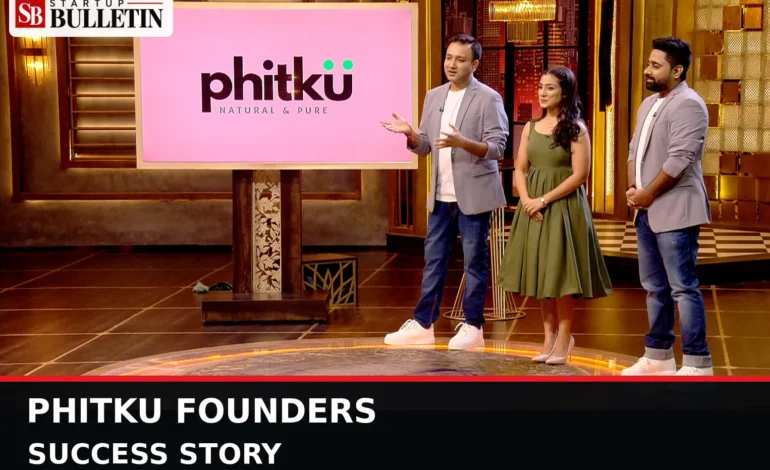
Phitku Founders Neha Marda Sumit Marda And Rahul Dokania Story

Searches for the Phitku founder often lead to actor Neha Marda because her public profile helped introduce the brand to a national audience. Phitku, however, was built by a wider founding team. Reports identify Sumit Marda as co-founder and chief executive, Neha Marda as co-founder and brand voice, and Rahul Dokania as a co-founder involved in product development.
The company sells personal care products built around mineral alum, commonly known in India as fitkari. Its best-known product is an underarm roll-on positioned as an alternative to conventional deodorants. The idea came from Neha’s experience with body odour after pregnancy and the family’s attempt to turn a familiar traditional ingredient into an easy modern format.
Phitku appeared on Shark Tank India Season 5 and announced a ₹1.8 crore agreement with Aman Gupta and Anupam Mittal. The pitch also attracted criticism over pricing, disclosure and deal terms. Later in 2026, Ananta Capital acquired a majority stake in the company. Entrepreneur India reported a deal size close to ₹100 crore at a valuation of about ₹200 crore, citing information it had learned. Because those terms were not presented as a statutory filing, they should remain attributed to that report.
Phitku At A Glance
The following summary introduces the main facts behind the Phitku founder story. It also separates the televised Shark Tank agreement from the later majority investment reported in 2026.
| Detail | Information |
|---|---|
| Founders | Sumit Marda Neha Marda and Rahul Dokania |
| Launch period | Early 2025 according to investment coverage |
| Main category | Personal care and underarm care |
| Hero product | Mineral alum based underarm roll-on |
| Shark Tank appearance | Season 5 in 2026 |
| Announced television deal | ₹1.8 crore from Aman Gupta and Anupam Mittal |
| Major corporate update | Ananta Capital announced a majority acquisition in July 2026 |
| Reported transaction context | Entrepreneur India reported a deal size near ₹100 crore at an approximately ₹200 crore valuation |
| Important caution | Customer revenue and profitability numbers are largely company statements or pitch figures |
The table shows that Phitku had three co-founders even though Neha Marda became its most visible public face. The Phitku founder story should therefore credit Sumit Marda and Rahul Dokania alongside Neha and clearly attribute private transaction figures to the publications that reported them.
Who Founded Phitku
Neha Marda is an actor known for television programmes including Balika Vadhu. Her celebrity status made her the most visible face of Phitku, but public reporting does not support describing her as the only founder. Sumit Marda and Rahul Dokania are also identified as co-founders.
Sumit Marda has been described as the chief executive. His role centres on building and operating the company. Neha contributes the personal origin story and public communication. Rahul has been identified in funding coverage as a product-focused co-founder. This division matters because consumer brands usually require more than promotion. Formulation, sourcing, compliance, distribution and customer service determine whether attention becomes a repeatable business.
The founder story began with a personal problem. After pregnancy, Neha experienced body odour that she found difficult to manage with products she had tried. The team explored mineral alum, an ingredient that has long been used in Indian households. Instead of selling a raw alum block, Phitku developed a roll-on designed for regular use.
The brand name comes from the common word fitkari. That connection made the product easy to explain, but it also created a pricing challenge. Customers already knew alum as an inexpensive material. Phitku therefore had to justify why a formulated, packaged product cost much more than a basic block.
Phitku Founder Timeline
The Phitku founder timeline moved quickly from a personal-care idea to television exposure and a controlling institutional investment. Because the company is private, the milestones below use the dates and terms reported by the company and business publications.
| Period | Milestone | Why It Mattered |
|---|---|---|
| Product development stage | The team explored a convenient alum-based underarm format | A familiar ingredient was adapted into a branded personal-care product |
| Early 2025 | Investment coverage places the commercial launch around this period | The founders began testing whether customers would pay for the new format |
| 2026 | Phitku appeared on Shark Tank India Season 5 | The pitch created national awareness and strong public scrutiny |
| 2026 television deal | Aman Gupta and Anupam Mittal announced a ₹1.8 crore agreement | The deal added capital and consumer-brand experience subject to due diligence |
| July 2026 | Ananta Capital announced a majority acquisition | The Phitku founder team entered a new stage with an institutional controlling investor |
The fast sequence makes Phitku unusual among young consumer brands, but it does not replace the need for audited performance data. The Phitku founder journey will ultimately be judged by repeat purchases, compliant claims, distribution quality and the economics of scaling beyond one hero product.
Turning A Traditional Ingredient Into A Consumer Product
Traditional familiarity can reduce the education needed to introduce an ingredient. It can also make consumers sceptical about a premium price. A company must explain what it has added through formulation, consistency, safety testing, packaging and convenience.
Phitku positions its roll-on as a mineral alum based personal care product. Its public material says the formulation avoids alcohol, parabens, aluminium chloride and artificial fragrances. These are company claims and readers should refer to the product label for the latest ingredient list. Terms such as toxin-free should also be interpreted carefully because safety depends on ingredient, dose and intended use rather than a broad marketing label.
The product sits between deodorant, skincare and traditional personal care. That gives the brand several ways to reach customers, but it also creates a responsibility to make accurate claims. Reducing odour is different from treating a medical condition. Changes in skin colour, irritation or excessive sweating may require professional advice. A cosmetic product should not be presented as a substitute for diagnosis or treatment.
Early Sales And Market Response
During the Shark Tank India pitch, the founders said Phitku had generated ₹1 crore in revenue in its first two and a half months and about ₹14 crore in the current financial year at that time. Later coverage described more than two lakh units sold and strong customer ratings. Phitku’s LinkedIn page subsequently claimed more than six lakh customers and profitability within fourteen months.
These figures indicate rapid demand, but they come from the founders, company material or the television pitch. They are useful when clearly attributed. They should not be described as audited results unless financial statements confirm them.
Celebrity visibility probably helped the launch. Neha could introduce the product to an existing audience, reducing the initial cost of awareness. That advantage does not automatically create repeat purchases. Customers must still find the product effective, convenient and worth its price. The difference between attention and retention is especially important in personal care.
The Shark Tank India Pitch
Phitku’s Shark Tank India Season 5 episode became one of the more debated pitches of the season. The founders sought ₹1.8 crore for 1 percent equity. Sharks questioned the valuation, pricing and elements of the founders’ disclosures. Published reports said Aman Gupta and Anupam Mittal eventually agreed to invest ₹1.8 crore.
The episode included discussion of royalty and other conditions. The founders later said the television edit did not show the full resolution of those issues. Because different summaries compress the negotiation differently, an article should avoid presenting an incomplete royalty figure as the final legal position. The safe statement is that the on-screen pitch led to an announced ₹1.8 crore agreement with Aman Gupta and Anupam Mittal.
As with every television deal, an on-screen agreement is not automatically the same as money being transferred. Due diligence, contracts and closing conditions follow filming. Dealroom later reported the funding as secured, but privately negotiated terms are not fully public.
The controversy also shows why founders need exact answers during a pitch. Investors will compare customer acquisition cost, repeat rate, gross margin, pricing and founder ownership. A strong sales number will not remove questions about governance and disclosure.
Phitku Shark Tank Deal Summary
The Phitku founder pitch attracted attention because the brand combined a familiar ingredient, celebrity visibility and fast reported sales. The table below keeps the disclosed pitch terms separate from later investment events.
| Pitch Detail | Reported Information | Accuracy Note |
|---|---|---|
| Programme | Shark Tank India Season 5 | The episode aired in 2026 |
| Founders represented | Neha Marda and the Phitku founding team | Public reports identify Sumit Marda and Rahul Dokania as co-founders as well |
| Announced investment | ₹1.8 crore | Reported as the television agreement |
| Sharks | Aman Gupta and Anupam Mittal | Both joined the announced deal |
| Final legal position | Not fully public | Due diligence can change television terms |
| Later transaction | Ananta Capital majority acquisition | A separate corporate event announced in July 2026 |
This comparison avoids combining the Shark Tank investment with the Ananta Capital acquisition. Accurate Phitku founder coverage should present them as separate transactions with different investors, timing and levels of control.
Majority Investment By Ananta Capital
In July 2026, Ananta Capital announced the acquisition of a majority stake in Phitku. The development moved the story beyond a television appearance. A majority transaction means the investor gains control of more than half the company, although the precise ownership structure was not fully disclosed in the public sources reviewed.
Entrepreneur India reported that the transaction size was close to ₹100 crore and the valuation around ₹200 crore. Business Standard carried the acquisition announcement, while the reported financial terms should remain linked to the Entrepreneur report rather than stated as company-confirmed numbers.
Ananta Capital said the investment included primary capital and a secondary share purchase. Primary money goes into the company for growth. A secondary transaction pays existing shareholders who sell part of their stake. This distinction helps readers understand that the full deal value may not become cash on the company’s balance sheet.
The partnership can support manufacturing, product expansion, hiring and distribution. It also changes the founders’ responsibilities. A controlling investor will expect reporting systems, financial discipline and a clear plan for scaling beyond a hero product.
How Phitku Makes Money
Phitku sells personal care products through online channels and other retail platforms. Its business depends on selling packaged products at a price above manufacturing, packaging, logistics and channel costs. The company must also pay for advertising, customer support, product development and returns.
A hero product can make early marketing efficient because customers quickly associate the brand with one use case. The risk is concentration. If most revenue comes from a single roll-on, changing consumer interest or stronger competition can affect growth. New categories can reduce that risk, but poorly connected products may weaken the brand’s identity.
Repeat purchase is a key measure. Underarm products are consumable, so satisfied customers may reorder. The value of the business depends less on one viral month and more on how often customers return without expensive advertising.
Phitku Products And Business Drivers
The Phitku founder strategy begins with a hero product but depends on the wider economics of a personal-care brand. Product performance, repeat purchase and distribution are more important than a short burst of attention.
| Business Driver | Role In Growth | Question To Track |
|---|---|---|
| Alum-based roll-on | Gives Phitku a clear and memorable entry product | Do customers reorder after the first purchase |
| Product formulation | Adds convenience and consistency beyond a basic alum block | Are claims supported by testing and compliant labels |
| Online sales | Helps the company reach customers nationally | Can repeat revenue offset advertising and fulfilment costs |
| Retail distribution | Can place the product in front of more shoppers | Does the product sell consistently without heavy discounting |
| New categories | May reduce dependence on one hero product | Do extensions fit the same customer need and brand promise |
The table highlights the difference between awareness and a durable consumer business. For the Phitku founder team, long-term value will depend on product trust and recurring demand rather than celebrity reach alone.
What Entrepreneurs Can Learn
The Phitku founder story begins with a real problem experienced by a founder. Personal insight helped the team describe the use case in simple language. Founders should still test whether their own problem is shared by a large enough group and whether customers will pay for the proposed solution.
The second lesson is that an old ingredient can support a new product when format and convenience improve. Innovation does not always require inventing a new chemical. It may involve better formulation, quality control, packaging and distribution. The company must explain this added value honestly.
The third lesson is to prepare for scrutiny. Celebrity involvement may increase attention, but it also increases questions. Pricing, ownership, claims and deal history must be consistent across interviews, pitch material and legal documents.
The fourth lesson is that fast growth can attract strategic capital quickly. A majority investment may accelerate distribution, yet founders give up some control. The right decision depends on the company’s capital needs, the investor’s plan and the rights written into the agreement.
Risks And Open Questions
The company operates in a crowded personal care market. Larger brands have distribution, research teams and advertising budgets. Smaller direct-to-consumer brands can move faster but often spend heavily to acquire customers.
Product claims are another risk. Cosmetic language should remain supported by appropriate testing and compliant labels. Customers with sensitive skin may react differently, even when a product is described as gentle. Clear usage instructions and responsive customer service are important.
The long-term financial picture remains private. Media reports provide transaction values and company claims, but complete audited revenue, profit and cash flow data are not available in the reviewed public sources. Future reporting should separate confirmed filings from promotional statements.
Frequently Asked Questions
Phitku was co-founded by Sumit Marda, Neha Marda and Rahul Dokania. Neha Marda is the most visible public face, while Sumit has been identified as chief executive.
Phitku is known for a mineral alum based underarm roll-on. It positions the product as a modern and convenient format built around the traditional ingredient fitkari.
Phitku announced a ₹1.8 crore deal with Aman Gupta and Anupam Mittal during Shark Tank India Season 5. Final private legal terms have not been fully published.
Ananta Capital announced in July 2026 that it had acquired a majority stake in Phitku. The founders remained associated with the brand after the transaction announcement.
Entrepreneur India reported an approximately ₹200 crore valuation in connection with the Ananta Capital deal. The figure should be attributed to that report because full transaction documents are not public.
Conclusion
The Phitku founder story combines personal insight, a familiar Indian ingredient, celebrity reach and institutional capital. Neha Marda brought the original problem and public visibility, while Sumit Marda, Rahul Dokania and the wider team helped turn the idea into an operating consumer brand.
The company’s rapid rise is notable, but accurate coverage must separate the founders’ claims, television negotiations and reported transaction values. That approach gives readers a useful account of how Phitku grew without presenting private estimates as audited facts.
Editorial Disclaimer
This article is based on publicly available interviews, company pages and media reports reviewed in October 2026. Product information is provided for general awareness and is not medical advice. Shark Tank agreements and private investment terms may change during due diligence. Revenue, customer and profitability figures may be company-reported. Cross-check important information before making a purchase, investment or business decision. To report a verified correction, email contact@startupbulletin.in.