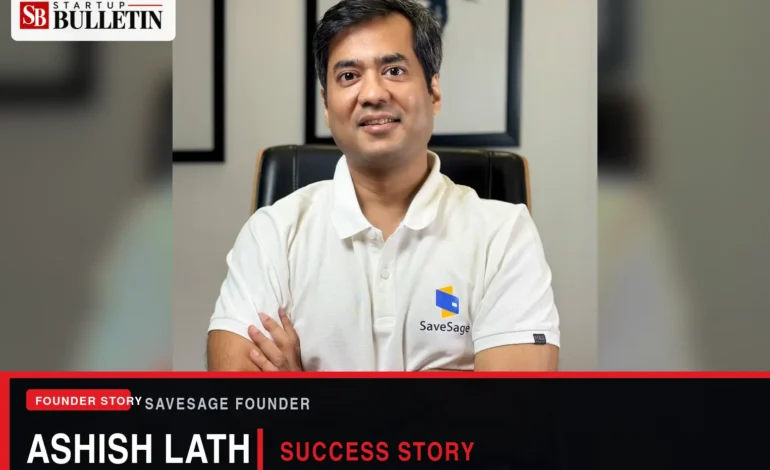
SaveSage Founder Ashish Lath Success Story

SaveSage founder Ashish Lath built the company around a problem many credit card users recognise. Reward points, airline miles, hotel programmes, transfer partners and card benefits are difficult to compare. A person may hold several cards but still use the wrong one for a purchase or allow rewards to expire.
SaveSage positions itself as a platform that helps users understand cards and get more value from their spending. The company gained national attention on Shark Tank India Season 5. Ashish entered the show asking for ₹1 crore for 1 percent equity. After a long negotiation, he accepted an announced ₹4 crore deal for 9 percent equity from Anupam Mittal, Kunal Bahl, Mohit Yadav and Namita Thapar.
The size of that agreement made SaveSage one of the most discussed pitches of the season. It also created debate about whether reward optimisation is a large independent business or information that consumers can obtain elsewhere. The answer depends on execution. Information may be publicly available, but organising it, updating it and giving personalised recommendations can still create value.
SaveSage At A Glance
The table below summarises the central facts in the SaveSage founder story before the article explains the product and pitch in detail. It distinguishes the founder’s reward-use examples from independently verified financial outcomes.
| Detail | Information |
|---|---|
| Founder | Ashish Lath |
| Base | Gurugram India |
| Category | Fintech and credit card rewards optimisation |
| Core service | Card discovery benefits tracking and reward guidance |
| Shark Tank appearance | Season 5 in January 2026 |
| Initial ask | ₹1 crore for 1 percent equity |
| Announced deal | ₹4 crore for 9 percent equity |
| Sharks in the deal | Anupam Mittal Kunal Bahl Mohit Yadav and Namita Thapar |
| Important caution | The public record confirms the on-screen agreement but not every post-diligence legal term |
These points explain why the SaveSage founder pitch became one of the most discussed episodes of the season. They also show why readers should separate an announced investment, an implied valuation and personal savings claims.
Who Is Ashish Lath
Ashish Lath is an entrepreneur and credit card rewards enthusiast. His public story became unusual because he did not present himself only as a software founder. He demonstrated the behaviour of an advanced rewards user.
During the Shark Tank episode, Ashish said he and his wife had used reward points to take hundreds of flights, book hotel nights and obtain jewellery without paying the normal cash price. Reports repeated figures including about 430 flights, 100 hotel nights and jewellery worth ₹15 lakh. These were statements made during the pitch and should be described as the founder’s claims, not independently audited savings.
The claims served a clear purpose. They showed the gap between an ordinary card user and someone who studies reward systems closely. Ashish’s argument was that software and expert guidance could bring part of that advantage to more people.
His personal expertise also creates a founder risk. A service based on one person’s knowledge must become a reliable system. Information should remain correct when banks change fees, transfer ratios, eligibility rules or redemption values. SaveSage therefore needs processes and data quality, not only founder-led advice.
SaveSage Founder Timeline
The SaveSage founder journey grew from Ashish Lath’s personal interest in credit-card rewards into a consumer fintech platform. The available public timeline is strongest around the Shark Tank appearance, while some earlier operating details remain private.
| Stage | Development | Why It Mattered |
|---|---|---|
| Personal research period | Ashish studied card rewards airline miles hotel points and redemption options | His specialist knowledge supplied the original product insight |
| Product-building stage | SaveSage organised card discovery benefits and rewards guidance | The founder’s knowledge began moving into a repeatable platform |
| January 2026 | SaveSage appeared on Shark Tank India Season 5 | The company received national attention and investor scrutiny |
| Initial pitch | ₹1 crore was requested for 1 percent equity | The ask implied a ₹100 crore valuation |
| Announced outcome | Four Sharks agreed to invest ₹4 crore for 9 percent equity | The televised negotiation produced a larger cheque at a lower implied valuation |
The timeline makes clear that the pitch was an important visibility event rather than proof that the business model had already reached maturity. The SaveSage founder team still has to convert expertise and attention into accurate guidance, renewals and trusted customer relationships.
The Problem SaveSage Tries To Solve
Indian consumers can choose from many credit cards. Each card has joining fees, annual fees, reward rules, spending milestones and exclusions. The best card for flights may not be the best card for groceries, rent or online shopping. A benefit may look attractive but offer little value if the customer never uses it.
Banks also change programmes. A card that offered high value last year may be devalued. Transfer partners can change, lounge access can be restricted and reward caps can reduce returns. Comparing all these details manually takes time.
SaveSage attempts to simplify three decisions. The first is which card suits a user’s spending pattern. The second is which existing card to use for a purchase. The third is how to redeem accumulated points effectively.
The product sits at the intersection of personal finance, travel and consumer software. It does not replace a bank, issue credit or guarantee rewards. Its value comes from recommendations and organisation. That distinction is important for both users and regulation.
How The Platform Can Create Value
A rewards platform can save users money only when the recommendation exceeds the cost of the service and the effort required. The best users are likely to have meaningful card spending, multiple products or travel goals. Someone with one basic card and low annual spend may not need advanced optimisation.
Personalisation can make the service more useful. Instead of publishing a general list of popular cards, a platform can ask where a user spends, how often the user travels and whether the user prefers cashback or points. The recommendation can then reflect actual behaviour.
Trust is central. SaveSage handles financial preferences and may connect to sensitive information. The company must explain what data it collects, how it protects that data and whether a recommendation is influenced by commissions from banks or card issuers. Clear disclosure helps users separate independent guidance from affiliate marketing.
The Shark Tank India Pitch
Ashish Lath appeared in the third episode of Shark Tank India Season 5. He asked for ₹1 crore for 1 percent equity, implying a ₹100 crore valuation. The Sharks questioned whether the service was defensible because social media already contains card advice.
The negotiation produced a larger investment at a lower valuation. Four Sharks initially offered ₹4 crore for 12 percent equity. Ashish negotiated, and the on-screen agreement closed at ₹4 crore for 9 percent. That implied a valuation of about ₹44.44 crore on a post-money calculation commonly used in pitch coverage.
The investors were Anupam Mittal, Kunal Bahl, Mohit Yadav and Namita Thapar. Aman Gupta did not join the final agreement. The group gives SaveSage access to experience in consumer internet, brand building, marketplaces and healthcare business operations.
An on-screen deal remains subject to due diligence. The final shareholding, conditions and transfer of funds may differ after legal review. SaveSage’s own blog describes the ₹4 crore moment, while independent coverage confirms the televised terms. Articles should use phrases such as announced deal or on-screen agreement unless a completed filing is available.
SaveSage Shark Tank Deal Breakdown
The SaveSage founder entered with a high valuation expectation and negotiated a larger investment than the original ask. The following table explains the change without treating the television agreement as a completed statutory transaction.
| Deal Element | Amount Or Term | What It Indicates |
|---|---|---|
| Initial ask | ₹1 crore for 1 percent equity | Implied a ₹100 crore valuation at the start of the pitch |
| Initial four-Shark offer | ₹4 crore for 12 percent equity | Increased the cheque while reducing the valuation expectation |
| Announced final deal | ₹4 crore for 9 percent equity | Common pitch calculations place the implied valuation around ₹44.44 crore |
| Participating Sharks | Anupam Mittal Kunal Bahl Mohit Yadav and Namita Thapar | Combined experience across consumer internet marketplaces and operating businesses |
| Status | On-screen agreement | Final documents and post-diligence terms are not fully public |
The larger cheque made the episode memorable, but ownership and valuation remain different questions. Accurate SaveSage founder reporting should state the equity percentage whenever it mentions the ₹4 crore headline.
Why The Pitch Became Viral
The pitch combined a large deal with striking lifestyle examples. Free flights and hotel stays are easy to understand. They also create an emotional reaction because many viewers use cards without feeling that they receive comparable value.
The valuation discussion added tension. A founder asking for ₹100 crore and later accepting an agreement around a much lower implied value creates a clear negotiation story. The presence of four Sharks made the result look like a strong endorsement, even though investors may have valued Ashish’s expertise and future potential more than current scale alone.
SaveSage also faced criticism after the episode. Some viewers questioned the usefulness of paid reward advice and the quality of the app. Criticism after a viral appearance is normal, but it becomes valuable feedback only when a company tracks specific complaints and improves the product.
The SaveSage Business Model
SaveSage can earn through membership or subscription fees for premium tools and guidance. Fintech comparison platforms may also receive referral income when users apply for financial products, although any such relationship should be clearly disclosed. The exact current mix of SaveSage revenue is not fully available in the reviewed public sources.
A recurring subscription is attractive because it produces predictable revenue. It also raises the standard for ongoing usefulness. Customers will renew only if the platform continues to save more money than it costs or provides convenience they value.
The company may serve frequent travellers, high-spending professionals, business owners and reward enthusiasts first. Expanding to ordinary users will require a simpler interface and clear proof of value. Too much jargon can make a rewards product difficult for beginners.
SaveSage Revenue Model And User Value
The SaveSage founder business model works only when the service delivers measurable value to users and explains how it earns money. The table separates possible revenue sources from the trust requirements attached to them.
| Revenue Or Value Area | How It May Work | Main Requirement |
|---|---|---|
| Membership or subscription | Users pay for premium tools guidance or monitoring | The savings and convenience should exceed the subscription cost |
| Referral income | A platform may earn when a user applies for a financial product | Commercial relationships should be disclosed clearly |
| Card comparison | Users receive recommendations based on spending patterns | Data and product rules must remain current |
| Reward tracking | The service helps users monitor points and benefits | The platform needs reliable alerts and accurate account information |
| Redemption guidance | Users compare airline hotel cashback or other uses | Recommendations should reflect fees availability and changing transfer values |
This structure shows why user trust is central to the SaveSage founder story. A recurring business cannot depend only on viral examples; it needs transparent incentives, secure data practices and savings that customers can verify.
What Entrepreneurs Can Learn
The first lesson from the SaveSage founder story is that specialised personal knowledge can become a product. Ashish spent years understanding rewards. The business opportunity appeared when he tried to make that knowledge repeatable for other users.
The second lesson is to demonstrate value with a concrete example. Hundreds of claimed flights were more memorable than a general promise to optimise points. Founders should still make clear which results are typical and which come from an expert user with unusually high engagement.
The third lesson is that public information can still support a business. Search engines contain recipes, legal forms and investment education, yet customers pay for organisation, personalisation and trusted execution. The company needs a better experience than scattered free content.
The fourth lesson is to prepare for criticism after visibility. A television appearance sends many new users to a product at once. Performance issues, unclear pricing or weak onboarding become public quickly. Technical readiness is part of marketing readiness.
Risks And Open Questions
Financial product information changes frequently. Incorrect advice can cause a user to pay an annual fee, miss a benefit or make a poor redemption. SaveSage needs strong update processes and visible timestamps for guidance.
The company also has to manage conflicts of interest. If a platform earns more from recommending one card, customers should know. Recommendations should be tied to user needs rather than only affiliate payouts.
Data protection is another concern. Even without handling bank passwords, spending information can reveal sensitive behaviour. The company should collect only what is necessary and explain retention and deletion policies.
Finally, the market size depends on willingness to pay. Advanced users may already do their own research, while casual users may not value optimisation enough. SaveSage must prove that a broad group saves measurable time or money.
Frequently Asked Questions
SaveSage was founded by Ashish Lath, a Gurugram-based entrepreneur known for his expertise in credit card rewards and travel points.
SaveSage helps users compare credit cards, understand benefits, track rewards and choose better redemption options based on their spending goals.
SaveSage announced an on-screen deal of ₹4 crore for 9 percent equity from Anupam Mittal, Kunal Bahl, Mohit Yadav and Namita Thapar.
The ₹4 crore agreement was among the largest announced cheques of Shark Tank India Season 5. Comparisons should distinguish total cheque size from valuation and equity sold.
No. SaveSage is a rewards optimisation and financial information platform. It does not issue the credit cards described in its service.
Conclusion
The SaveSage founder story shows how a narrow area of financial expertise can become a consumer technology product. Ashish Lath used his own reward optimisation experience to explain the problem, then secured a large four-Shark agreement on national television.
The next test is less dramatic. SaveSage must keep information accurate, earn trust, protect user data and prove that its recommendations create value beyond free online content. Those operating details will determine whether the attention from Shark Tank becomes a durable fintech business.
Editorial Disclaimer
This article is based on publicly available company material and media coverage reviewed in October 2026. It is general information and not financial advice. Credit card fees, rewards and eligibility rules can change. Shark Tank agreements may change during due diligence. The savings examples in the pitch were founder claims and may not represent typical results. Verify current terms directly with the relevant bank. For factual corrections, contact contact@startupbulletin.in.