Kiddo Baby Care Startup: Ankit Kawatra’s Quick-Commerce Bet for Parents

Quick commerce has made everyday essentials available within minutes. Kiddo is betting that parents need the same speed with more specialised product selection.
Launched in 2025, the Kiddo baby care startup delivers baby and children’s products in Delhi NCR. Its model combines quick delivery with recommendations based on a child’s age and life stage. The company says it has curated more than 30,000 products and plans to expand its dark-store network.
Kiddo gained attention in September 2026 after raising ₹12.5 crore in a pre-seed round led by Campus Fund. The capital is intended for customer acquisition, technology, hiring and dark-store expansion. The startup has not publicly disclosed verified revenue, valuation, order volume or profitability.
| Detail | Information available |
|---|---|
| Company | Kiddo |
| Founded | 2025 |
| Founder and CEO | Ankit Kawatra |
| Headquarters/initial market | Delhi NCR |
| Category | Baby and kids’ quick commerce |
| Delivery proposition | Fast, location-dependent delivery; official company channels currently mention approximately 30–60 minutes |
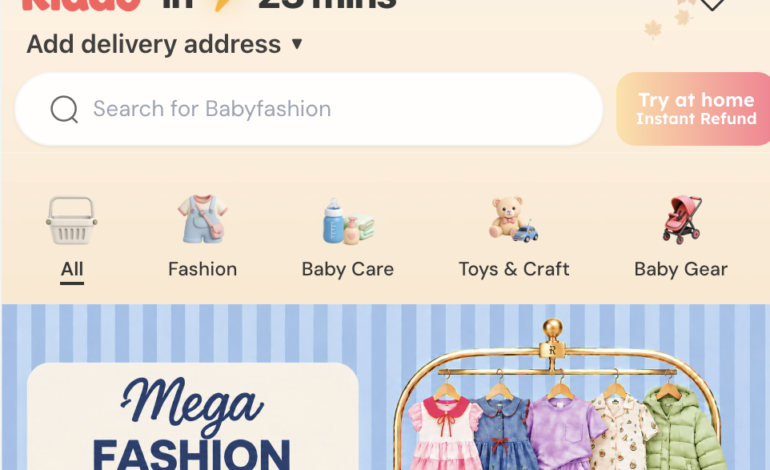
| Product categories | Baby care, fashion, toys, baby gear, products for new mothers and books |
| Funding | ₹12.5 crore pre-seed round |
| Lead investor | Campus Fund |
| Other investors | Strategic angel investors; names were not disclosed in reviewed reports |
| Verified revenue or valuation | Not publicly disclosed |
Who Is Kiddo Founder Ankit Kawatra?
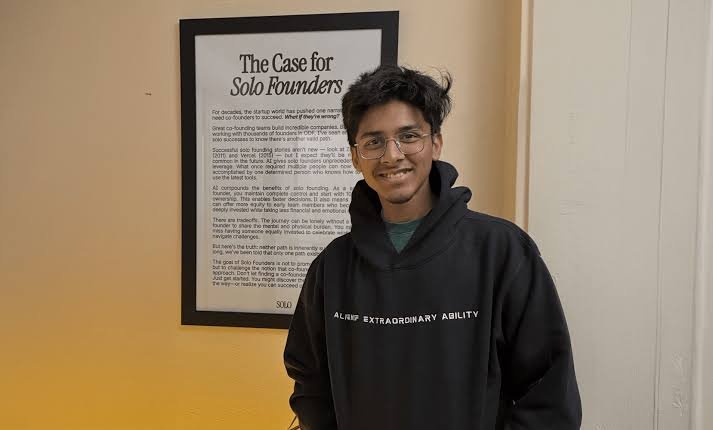
Ankit Kawatra is the founder and CEO of Kiddo. Before entering baby-care commerce, he founded Feeding India in 2014 to address food waste and hunger. Contemporary coverage indicates that Srishti Jain was part of the initiative’s early team, but the primary sources reviewed do not clearly identify her as a co-founder.
Feeding India expanded through a volunteer network before becoming part of Zomato in July 2019, a transaction confirmed by Zomato and contemporary Livemint reporting.
Funding coverage says Kawatra completed an MBA at Stanford Graduate School of Business in 2023. Campus Fund also highlighted his experience as a parent of two young children as part of its investment rationale.
What Problem Is Kiddo Trying to Solve?
General quick-commerce platforms carry some baby products, but baby care is only one part of a much wider catalogue. Kiddo is building its entire discovery and delivery experience around parents and caregivers.
Its proposition has two connected parts:
- Speed: Deliver commonly required baby and kids’ products quickly.
- Relevance: Recommend products according to the child’s age and life stage.
A long catalogue is not useful if a parent cannot identify the right size, age group or product type. Kiddo aims to make selection easier while retaining quick-commerce convenience.
How the Kiddo Business Model Works
Kiddo operates a category-focused, inventory-led quick-commerce model. It uses dark stores to keep products closer to customers. Its official website currently carries a “60-minute delivery” title, while the company’s LinkedIn profile describes a 30-minute proposition. Actual delivery time can vary by location, product availability and the address entered by a customer.
| Business-model layer | How it works | Key question |
|---|---|---|
| Curated catalogue | Products organised around baby, kids and parenting needs | Can Kiddo maintain useful depth without carrying excessive inventory? |
| Life-stage recommendations | Product discovery changes with the child’s age and requirements | Will recommendations improve conversion and customer trust? |
| Dark-store delivery | Inventory is positioned within Delhi NCR for faster fulfilment | Can order density cover fulfilment and last-mile costs? |
| Repeat categories | Essentials may be purchased regularly as the child grows | Can the company build strong retention rather than depend on discounts? |
| Community-led acquisition | Parenting content and community may reduce reliance on paid ads | Can engagement consistently produce paying customers? |
This wider selection may increase order value, but it also makes demand forecasting and inventory planning more complex.
Kiddo’s ₹12.5 Crore Funding Round
The Kiddo baby care startup raised ₹12.5 crore in a pre-seed round led by Campus Fund, with participation from undisclosed strategic angel investors.
| Funding detail | Reported information |
|---|---|
| Round | Pre-seed |
| Amount | ₹12.5 crore |
| Lead investor | Campus Fund |
| Announcement | September 2026 |
| Planned use | Customer acquisition, Delhi NCR dark stores, technology, product development and hiring |
| Valuation after the round | Not disclosed |
| Founder or investor shareholding | Not disclosed |
Funding is not the same as revenue or business success. Kiddo must still demonstrate repeat demand and sustainable unit economics.
What Does the “30,000+ Products” Claim Mean?
Kiddo says it has curated more than 30,000 SKUs. This is a company-reported catalogue figure, not independently verified inventory held at every dark store. The sources do not disclose how many SKUs each location stocks.
Fast delivery depends on local availability, not only the platform-wide catalogue.
Kiddo’s Reported Market Opportunity
Launch coverage states that India’s baby-care market was worth $31 billion in 2022 and could reach $56 billion by 2029. These figures come from the company’s funding announcement and the underlying market report is not identified in the reviewed articles.
The same coverage claims a 13–14% compound annual growth rate. However, growth from $31 billion to $56 billion over seven years mathematically implies a CAGR of approximately 8.8%, not 13–14%.
Different category definitions or time periods may explain the mismatch, but the public material does not say so. Neither figure should therefore be treated as independently verified. Even so, baby care includes urgent and repeat purchases, while parents may value trusted selection.
How Kiddo Is Different from General Quick Commerce
| General quick-commerce platform | Kiddo’s proposed approach |
|---|---|
| Baby care is one category among many | Baby, kids and parenting are the core focus |
| Product discovery is generally search-led | Recommendations can follow the child’s life stage |
| Inventory prioritises mass-market demand | Kiddo can offer deeper category-specific selection |
| Marketing addresses a broad household audience | Messaging can focus specifically on parents and caregivers |
Specialisation may build trust, but general platforms have larger customer bases, more delivery locations and stronger purchasing power. Kiddo must prove that curation can offset those advantages.
Competition in Baby-Care Commerce
FirstCry is an established baby and kids’ retailer, while Blinkit, Zepto and Swiggy Instamart carry parenting essentials.
Funding coverage also identifies Peeko and OZi as category-focused competitors. Kiddo’s differentiation cannot rely on speed alone; product trust, relevant recommendations and availability may be more defensible.
Key Opportunities and Risks
| Opportunity | Related risk |
|---|---|
| Urgent and repeat purchases | Convenience may not compensate for unavailable products |
| Age-based recommendations | Incorrect or weak recommendations could reduce trust |
| Large specialised catalogue | Too many slow-moving SKUs can lock up working capital |
| Focused parent community | Customer acquisition may still become expensive |
| Delhi NCR density | Expansion to new cities could weaken delivery economics |
Kiddo also claims a higher blended gross margin than typical horizontal grocery quick-commerce businesses. With no supporting figures disclosed, this remains unverified.
What Founders Can Learn from Kiddo
- Choose a narrow customer group: Kiddo is not building delivery for everyone; it is designing the experience around parents.
- Combine speed with expertise: Fast delivery alone is easy to compare. Relevant recommendations can create a stronger reason to return.
- Start with one geography: Concentrating on Delhi NCR may help the company test order density before wider expansion.
- Treat catalogue size carefully: More products can improve choice, but only if inventory remains available and economically manageable.
- Separate funding from proof: A ₹12.5 crore round funds experimentation; retention and contribution margins will determine the outcome.
Is Kiddo Already a Success Story?
Not yet. Kiddo has secured a notable pre-seed round and has an experienced founder, but public sources do not provide verified revenue, profit, customer or retention data. It is more accurate to call Kiddo an early-stage, category-focused quick-commerce startup.
Frequently Asked Questions
Ankit Kawatra is Kiddo’s founder and CEO. He previously founded Feeding India, which became part of Zomato in 2019.
Kiddo announced a ₹12.5 crore pre-seed round led by Campus Fund. The participating strategic angel investors were not named in the reports reviewed.
Kiddo sells baby care products, children’s fashion, toys, baby gear, books and products for new mothers.
The company is initially focused on Delhi NCR and plans to use part of its funding to expand its dark-store network there.
No verified revenue or valuation figures were found. The ₹12.5 crore number refers to funding, not revenue or company valuation.
The Kiddo baby care startup is applying quick-commerce infrastructure to a specialised parenting problem. Founder Ankit Kawatra brings experience from building Feeding India, while Campus Fund’s backing gives the company capital to test its model across Delhi NCR.
Kiddo must show that life-stage recommendations, trusted products and deeper selection make shopping easier for parents. If it can do that while controlling inventory and fulfilment costs, it may build a defensible position.
For now, Kiddo is a promising company to watch—not a proven success story.
Editorial Disclaimer
This article is based on publicly available company statements, investor communications, media reports and Kiddo’s website as reviewed. Claims relating to catalogue size, gross margins, market size and growth projections originate from the company or its funding announcement and have been identified accordingly.
If you find an error or have updated supporting documents, please mail us, so we can review and correct the article.